





In a plan that has divided a bayside community, Ormiston College argues it must first destroy a koala habitat to save it, proposing to clear 650 mature trees to make way for a greener, stronger ecosystem.
An Unconventional Promise
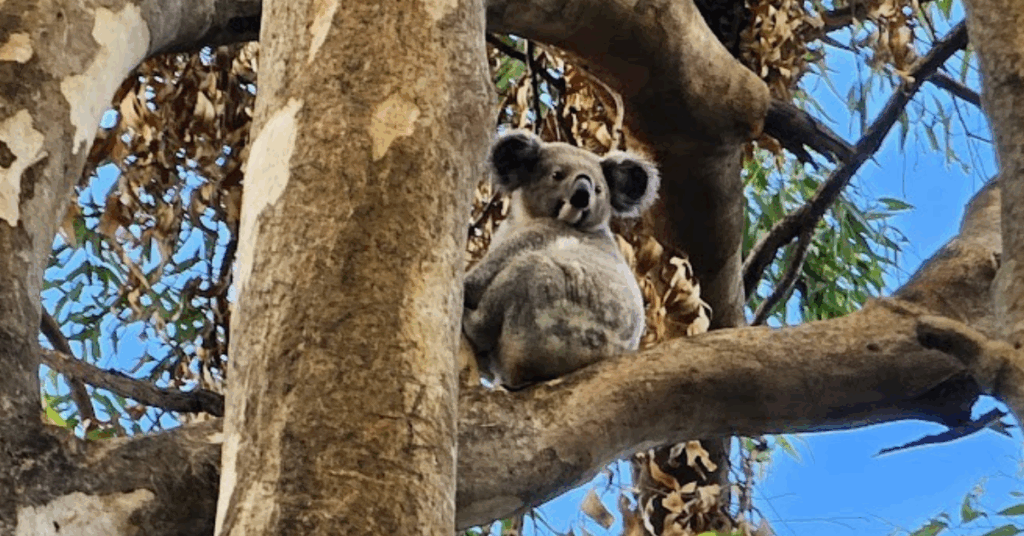
At the heart of the heated debate is Ormiston College’s plan for a major campus expansion, which includes a 50-metre Olympic swimming pool, a boarding house, an indoor sports complex, and new junior sporting fields. To build this, the college intends to clear a significant portion of its land, much of which is mapped as core koala habitat within a designated Koala Priority Area.
However, the school’s leadership insists the project is being undertaken with environmental sensitivity. The college’s principal, Michael Hornby, has stated that the works will ultimately strengthen the ecological value of the site. According to the school, there will be no net loss of koala habitat. Their plan, guided by ecologists, involves a massive rehabilitation effort that includes planting nine times more preferred koala food trees than are originally present, with the goal of improving a vital wildlife corridor in the long term.
A Community’s Outcry

This vision of creating a better habitat through clearing has been met with widespread community concern and disbelief. For many residents and conservationists, the logic is flawed. The local Koala Action Group argues that the proposal will remove nearly a third of the on-site koala habitat. A spokesperson for the group, Debbie Pointing, has stated that newly planted saplings cannot replace the value of decades-old trees that form an established core habitat.
This sentiment is echoed across community social media pages, where residents have voiced strong opposition. The prevailing feeling is that the area has enough sporting facilities, but not enough protected habitat for its dwindling koala population. The recent road death of a beloved local koala named Jacki near the site has only amplified fears that the region’s natural heritage is disappearing. For these residents, preservation of what exists is paramount, not replacement.
A Controversial Path Forward
The college’s previous attempt to have a similar project approved was rejected by the Redland City Council due to its impact on protected koala corridors. This time, the school is using a state-level planning process known as a Ministerial Infrastructure Designation, or MID.
This process allows the state’s Planning Minister to have the final say, overriding the local council’s decision. While the public can submit comments on the project until August 11, the MID process removes the right for third parties to appeal the decision once it is made. This has left many in the community feeling that their voice may be heard, but that they lack the power to stop the bulldozers if the project is ultimately approved. For critics, the central question is whether environmental laws hold up when large institutions decide to build.
Published Date 29-July-2025