




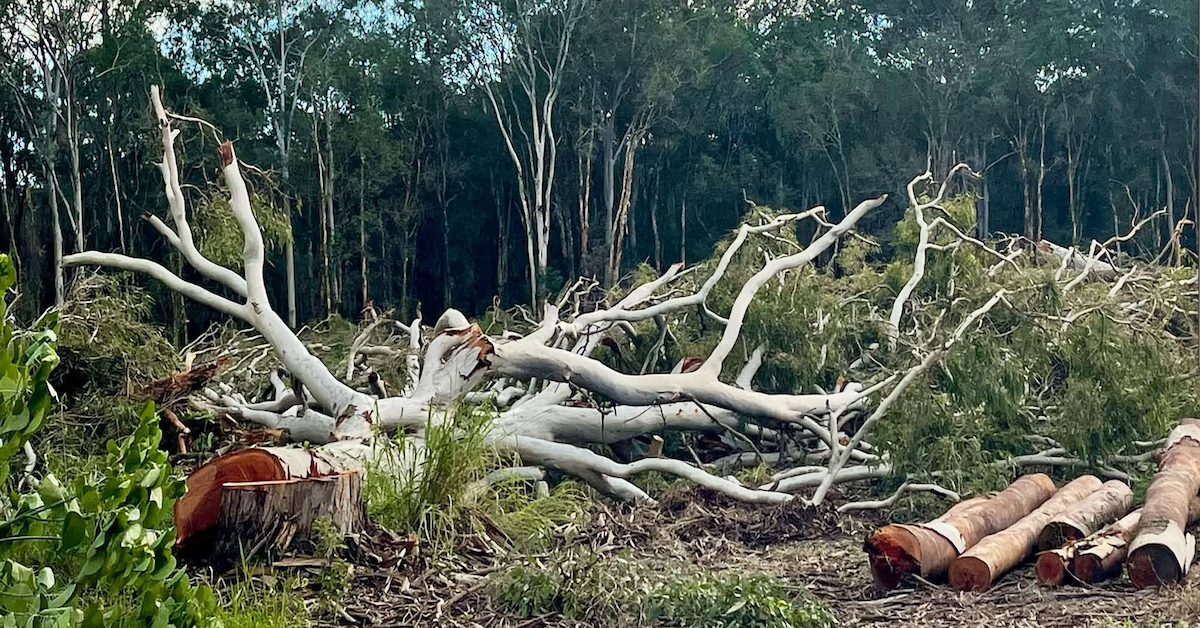
Fresh from a rally that drew about 400 people through the streets of Cleveland, Redlands campaigners have brought the long-running dispute over tree clearing at Ormiston College into a broader regional debate over koala habitat protection. What began as a dispute centred on the college’s expansion has spread beyond Ormiston, drawing wider attention across the Redlands to the balance between development and the protection of mature vegetation.
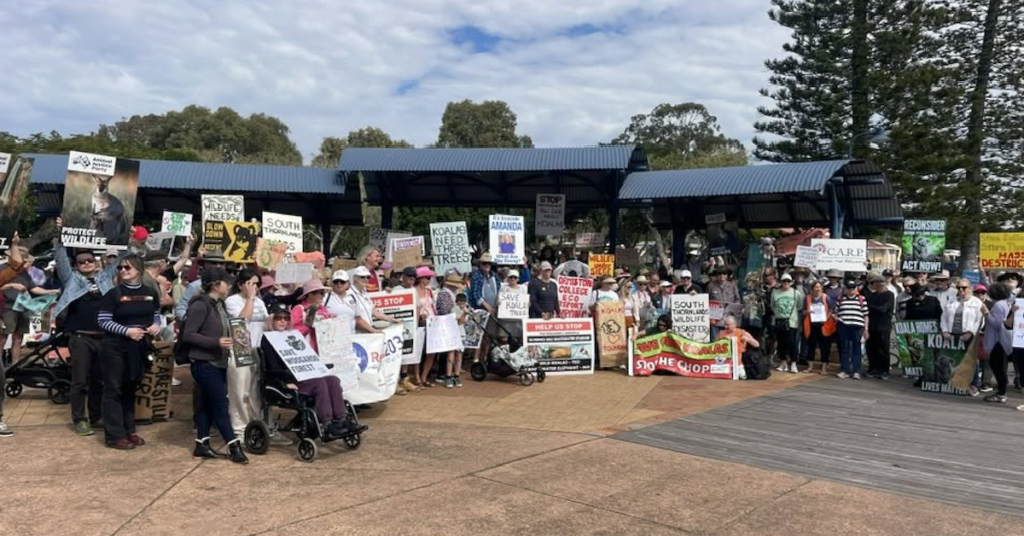
The campaign drew about 400 people to Raby Bay Harbour Park on Wednesday, 12 August, before they marched through Cleveland CBD. Organised by the Australian Conservation Foundation Community Bayside and local environment and koala groups, the procession ended outside political offices, with campaigners arguing the Ormiston dispute had become part of a wider Redlands debate over habitat loss.
Koala Safe Neighbourhood confronts clearing dispute
The Cleveland march followed months of community opposition in Ormiston, which Redland City Council selected as its first Koala Safe Neighbourhood because of its longstanding koala population. The designation has added weight to concerns from residents and conservationists who argue continued development must be carefully balanced against the protection of established habitat and wildlife movement routes.
On May 26, clearing works were halted after a fauna spotter identified a young male koala in a tree among those next slated for removal. The incident added to an already prominent campaign against the clearing, which included a Queensland Parliament petition calling for 652 mature koala habitat trees to be saved and attracting 8,300 signatures.
At the heart of the dispute is Ormiston College’s multi-stage expansion, which involves the removal of about 650 trees to make way for sporting, teaching, boarding and other facilities within its existing 67-acre campus. Although the project was approved through a state Ministerial Infrastructure Designation, conservationists argue the clearing will reduce habitat and disrupt koala movement corridors.
Conservationists also argue replacement trees will take decades to mature and cannot immediately provide the habitat functions of established vegetation. Their concern centres on the gap between habitat being removed now and the ecological benefits expected from revegetation as newly planted trees mature.
College puts its case for habitat replacement
Ormiston College has defended its masterplan, saying ecological assessments identified the development area primarily as a koala transit corridor rather than a breeding ground or high-density habitat. The college says koalas are occasionally observed on the campus and maintains that recorded activity is consistent with animals moving through the area rather than permanently occupying it.
The college says 80 per cent of existing koala transit zones across the campus will remain untouched and has committed to planting at least 526 preferred koala food trees. Its ecological assessment says the project will achieve a one-to-one replacement of koala habitat area over the longer term.
The college also says community feedback led to several changes to the masterplan, including the removal of a proposed car park from a sensitive part of the koala corridor. Other changes outlined by the school include a reduced development footprint, increased setbacks and targeted revegetation intended to strengthen movement routes through the site.
For campaigners opposing the clearing, however, replacement planting has not resolved concerns about the immediate loss of mature vegetation. They argue that retaining existing trees provides habitat value now, while newly planted food trees require years of growth before they can perform comparable ecological functions.
The college maintains that its environmental controls, retained vegetation and revegetation program will strengthen habitat connectivity over time. It has also said clearing is undertaken under wildlife protection protocols, including the presence of licensed fauna spotters and requirements for work to stop when wildlife is detected in an affected area.
Habitat debate carries into the political arena
The dispute is also feeding into a wider political campaign ahead of the 2028 Queensland state election, with conservation groups warning decision-makers of electoral consequences if habitat concerns are not addressed. The Cleveland rally brought that message directly to the offices of state and federal representatives, demonstrating how a development dispute centred in Ormiston has become part of a broader Redlands conversation.
Published 13-Aug-2026